.png)


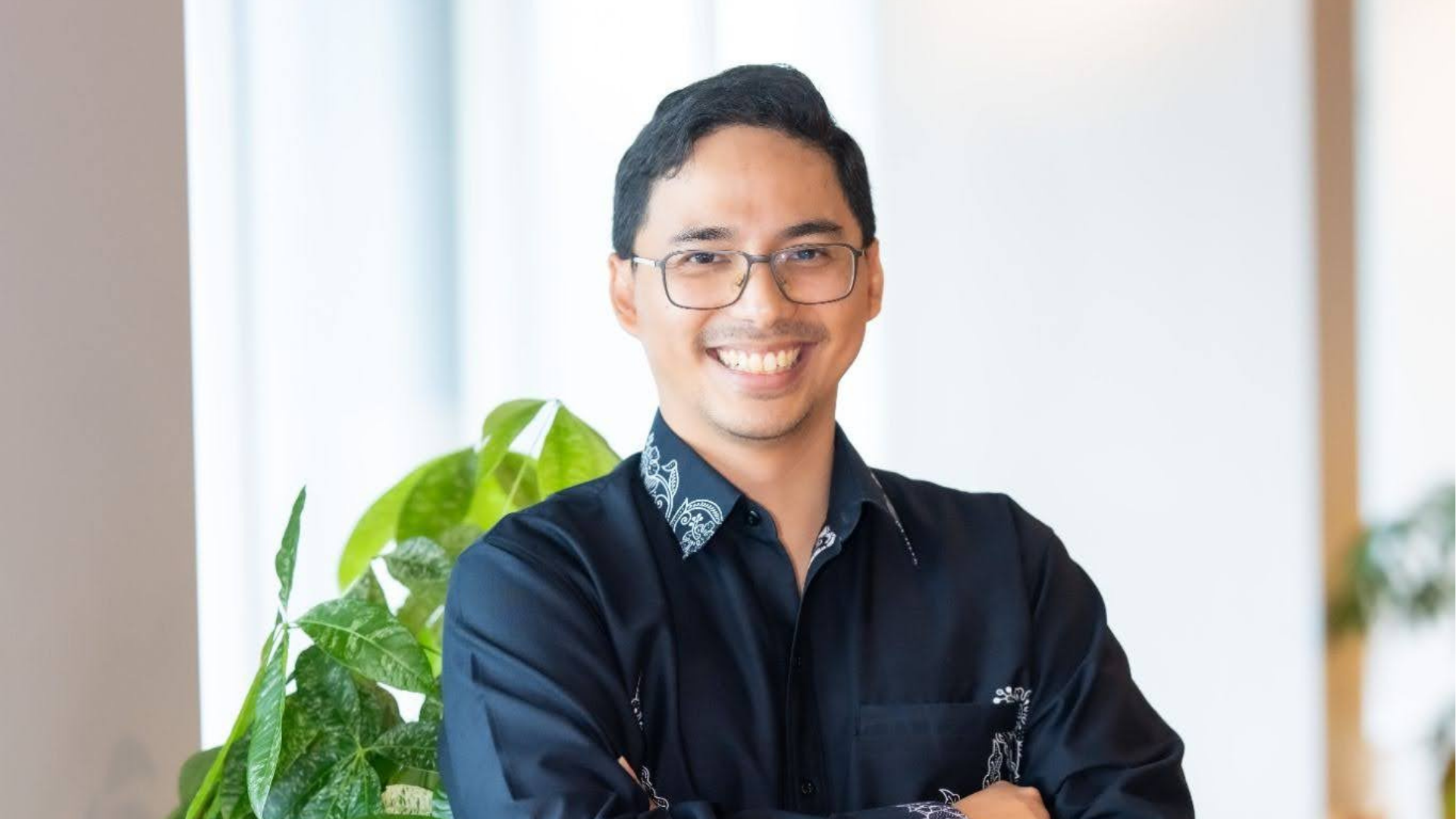
Your career has taken you from climate science research to leading conservation and nature-based solutions initiatives across Asia. What inspired your journey into environmental leadership, and what motivates your work today?
Growing up in Indonesia, I saw firsthand how climate change fuelled major forest and peatland fires, as well as intense floods and landslides. Those early experiences sparked a deep curiosity. While my academic journey started with a deep dive into climate and earth science, I quickly realized that solving these massive challenges required a bigger picture. I consciously pursued environmental studies from multiple angles—spanning the hard sciences, policy, and international relations.
Today, coordinating forest and landscape initiatives across Asia as part of the IUCN Secretariat lets me bring all those threads together. On a personal level, raising my five-year-old daughter adds a profound sense of urgency to this work. Bridging the gap between scientific research and tangible, nature-based solutions is incredibly motivating; I truly feel I have found my ikigai here.
Many of the environmental challenges you work on span countries, cultures, and sectors. What have these experiences taught you about leading across different perspectives and stakeholder groups?
If there is one absolute truth in conservation, it is that there is no one-size-fits-all solution. My day-to-day involves aligning a huge mix of stakeholders—from local community leaders and non-profits to government officials and multilateral financiers.
While the overarching environmental issues often look similar on paper, each country, culture, and sector introduces its own critical nuances. I've learned that leading in this space requires real cultural dexterity and tactical listening.
We absolutely need to draw on best practices, but it is just as vital to genuinely listen to all voices—especially the contrasting ones—before offering support that is deeply contextualized and backed by evidence.
As someone working at the intersection of science, policy, and practice, what motivated you to apply to the World Wise Executive Leadership Program at this stage in your career?
Up to this point, my leadership development has been largely self-guided. But as I've taken on managing complex, multi-funded conservation projects—which often means making high-stakes decisions under uncertainty—I realized I needed a more rigorous framework.
I was looking for an executive program that zeroes in on systems thinking, AI-assisted decision making, and impactful leadership, and the World Wise curriculum fits that bill perfectly. Having spent nearly a decade living and studying in the United States during my time at Brown and Wesleyan, I've often heard about Minerva’s reputation. I’m especially drawn to Minerva’s active, lecture-free approach. The chance to bypass traditional theory and immediately apply structured frameworks to the live policy challenges I face every day sounds refreshing and appears to be what I need right now.
Climate resilience and conservation often require collaboration among governments, local communities, nonprofits, and the private sector. Why do you believe cultural fluency and adaptive leadership are increasingly important for addressing these complex challenges?
The climate and biodiversity crises are global, but their impacts and solutions are intensely local. Balancing the immediate economic realities of communities with long-term ecological sustainability is a tough tightrope to walk.
Because different cultures have fundamentally different ways of communicating, building trust, and negotiating, cultural fluency is what allows us to translate complex priorities into unified action, and turn potential misunderstandings into true collaboration. Adaptive leadership is just as critical. In an era of rapid environmental change and geopolitical shifts, we as leaders have to be able to pivot quickly.
It reminds me a bit of trail running or scuba diving; you have to constantly read your environment and adapt your pacing and direction. Whether navigating regional dialogues or global agreements/resolutions, the ability to adapt and connect across cultural lines is often what makes real progress possible.
As a Nippon Foundation Scholar and member of the inaugural World Wise cohort, what impact do you hope this experience will have on your leadership journey and the future of environmental sustainability in the region?
Joining the inaugural World Wise cohort is an incredible opportunity to stress-test my approaches alongside a diverse, high-calibre group of leaders from the region. As a Nippon Foundation Scholar, I want to take the program's foci on leadership clarity, cultural dexterity, and structural problem-solving and translate those into actionable insights for nature-based solutions across Asia.
I’m looking to equip myself with the advanced leadership and decision-making toolkits needed to effectively lead my team, rally my colleagues and stakeholders, and scale our conservation work.
Plus, being part of the very first cohort means I get to help shape the program’s future through active feedback. Ultimately, I hope this experience refines my ability to navigate complex, cross-border agreements, so we can drive more resilient outcomes for the ecosystems—and the next generation—relying on them.
--
Ready to strengthen your leadership across cultures? Learn more about Minerva University’s World Wise Executive Leadership Program.
Quick Facts
Computational Sciences
Computational Sciences
Natural Sciences
Computational Sciences
Arts & Humanities, Natural Sciences
Social Sciences & Arts and Humanities
Business
Computational Sciences
Computational Sciences
Social Sciences & Business
Computational Sciences
Social Sciences
Computational Sciences & Business
Business & Computational Sciences
Computational Sciences
Computational Sciences
Social Sciences & Business
Business
Natural Sciences
Social Sciences
Social Sciences
Social Sciences & Business
Business & Computational Sciences
Business and Social Sciences
Social Sciences and Business
Computational Sciences & Social Sciences
Computer Science & Arts and Humanities
Business and Computational Sciences
Business and Social Sciences
Natural Sciences
Arts and Humanities
Business, Social Sciences
Business & Arts and Humanities
Computational Sciences
Natural Sciences, Computer Science
Computational Sciences
Arts & Humanities
Computational Sciences, Social Sciences
Computational Sciences
Computational Sciences
Natural Sciences, Social Sciences
Social Sciences, Natural Sciences
Data Science, Statistics
Computational Sciences
Business
Computational Sciences, Data Science
Social Sciences
Natural Sciences
Business, Natural Sciences
Business, Social Sciences
Computational Sciences
Arts & Humanities, Social Sciences
Social Sciences
Computational Sciences, Natural Sciences
Natural Sciences
Computational Sciences, Social Sciences
Business, Social Sciences
Computational Sciences
Natural Sciences, Social Sciences
Social Sciences
Arts & Humanities, Social Sciences
Arts & Humanities, Social Science
Social Sciences, Business
Arts & Humanities
Computational Sciences, Social Science
Natural Sciences, Computer Science
Computational Science, Statistic Natural Sciences
Business & Social Sciences
Sustainability
Sustainability
Natural Sciences & Sustainability
Natural Sciences
Sustainability
Computational Sciences
Computational Sciences
Computational Science & Business
Data Science and Statistics
Data Science and Statistics, Digital Practices
Earth and Environmental Systems
Cognition, Brain, and Behavior & Philosophy, Ethics, and the Law
Computational Theory and Analysis
Computer Science and Artificial Intelligence
Brand Management & Computer Science and Artificial Intelligence
Computer Science and Artificial Intelligence
Economics and Society & Strategic Finance
Enterprise Management
Economics and Society
Cells and Organisms & Brain, Cognition, and Behavior
Cognitive Science and Economics & Political Science
Applied Problem Solving & Computer Science and Artificial Intelligence
Computer Science and Artificial Intelligence & Cognition, Brain, and Behavior
Designing Societies & New Ventures
Strategic Finance & Data Science and Statistics
Brand Management and Designing Societies
Data Science & Economics
Machine Learning
Cells, Organisms, Data Science, Statistics
Arts & Literature and Historical Forces
Artificial Intelligence & Computer Science
Cells and Organisms, Mind and Emotion
Economics, Physics
Managing Operational Complexity and Strategic Finance
Global Development Studies and Brain, Cognition, and Behavior
Scalable Growth, Designing Societies
Business
Drug Discovery Research, Designing and Implementing Policies
Historical Forces, Cognition, Brain, and Behavior
Artificial Intelligence, Psychology
Designing Solutions, Data Science and Statistics
Data Science and Statistic, Theoretical Foundations of Natural Science
Strategic Finance, Politics, Government, and Society
Conversation
Your career has taken you from climate science research to leading conservation and nature-based solutions initiatives across Asia. What inspired your journey into environmental leadership, and what motivates your work today?
Growing up in Indonesia, I saw firsthand how climate change fuelled major forest and peatland fires, as well as intense floods and landslides. Those early experiences sparked a deep curiosity. While my academic journey started with a deep dive into climate and earth science, I quickly realized that solving these massive challenges required a bigger picture. I consciously pursued environmental studies from multiple angles—spanning the hard sciences, policy, and international relations.
Today, coordinating forest and landscape initiatives across Asia as part of the IUCN Secretariat lets me bring all those threads together. On a personal level, raising my five-year-old daughter adds a profound sense of urgency to this work. Bridging the gap between scientific research and tangible, nature-based solutions is incredibly motivating; I truly feel I have found my ikigai here.
Many of the environmental challenges you work on span countries, cultures, and sectors. What have these experiences taught you about leading across different perspectives and stakeholder groups?
If there is one absolute truth in conservation, it is that there is no one-size-fits-all solution. My day-to-day involves aligning a huge mix of stakeholders—from local community leaders and non-profits to government officials and multilateral financiers.
While the overarching environmental issues often look similar on paper, each country, culture, and sector introduces its own critical nuances. I've learned that leading in this space requires real cultural dexterity and tactical listening.
We absolutely need to draw on best practices, but it is just as vital to genuinely listen to all voices—especially the contrasting ones—before offering support that is deeply contextualized and backed by evidence.
As someone working at the intersection of science, policy, and practice, what motivated you to apply to the World Wise Executive Leadership Program at this stage in your career?
Up to this point, my leadership development has been largely self-guided. But as I've taken on managing complex, multi-funded conservation projects—which often means making high-stakes decisions under uncertainty—I realized I needed a more rigorous framework.
I was looking for an executive program that zeroes in on systems thinking, AI-assisted decision making, and impactful leadership, and the World Wise curriculum fits that bill perfectly. Having spent nearly a decade living and studying in the United States during my time at Brown and Wesleyan, I've often heard about Minerva’s reputation. I’m especially drawn to Minerva’s active, lecture-free approach. The chance to bypass traditional theory and immediately apply structured frameworks to the live policy challenges I face every day sounds refreshing and appears to be what I need right now.
Climate resilience and conservation often require collaboration among governments, local communities, nonprofits, and the private sector. Why do you believe cultural fluency and adaptive leadership are increasingly important for addressing these complex challenges?
The climate and biodiversity crises are global, but their impacts and solutions are intensely local. Balancing the immediate economic realities of communities with long-term ecological sustainability is a tough tightrope to walk.
Because different cultures have fundamentally different ways of communicating, building trust, and negotiating, cultural fluency is what allows us to translate complex priorities into unified action, and turn potential misunderstandings into true collaboration. Adaptive leadership is just as critical. In an era of rapid environmental change and geopolitical shifts, we as leaders have to be able to pivot quickly.
It reminds me a bit of trail running or scuba diving; you have to constantly read your environment and adapt your pacing and direction. Whether navigating regional dialogues or global agreements/resolutions, the ability to adapt and connect across cultural lines is often what makes real progress possible.
As a Nippon Foundation Scholar and member of the inaugural World Wise cohort, what impact do you hope this experience will have on your leadership journey and the future of environmental sustainability in the region?
Joining the inaugural World Wise cohort is an incredible opportunity to stress-test my approaches alongside a diverse, high-calibre group of leaders from the region. As a Nippon Foundation Scholar, I want to take the program's foci on leadership clarity, cultural dexterity, and structural problem-solving and translate those into actionable insights for nature-based solutions across Asia.
I’m looking to equip myself with the advanced leadership and decision-making toolkits needed to effectively lead my team, rally my colleagues and stakeholders, and scale our conservation work.
Plus, being part of the very first cohort means I get to help shape the program’s future through active feedback. Ultimately, I hope this experience refines my ability to navigate complex, cross-border agreements, so we can drive more resilient outcomes for the ecosystems—and the next generation—relying on them.
--
Ready to strengthen your leadership across cultures? Learn more about Minerva University’s World Wise Executive Leadership Program.